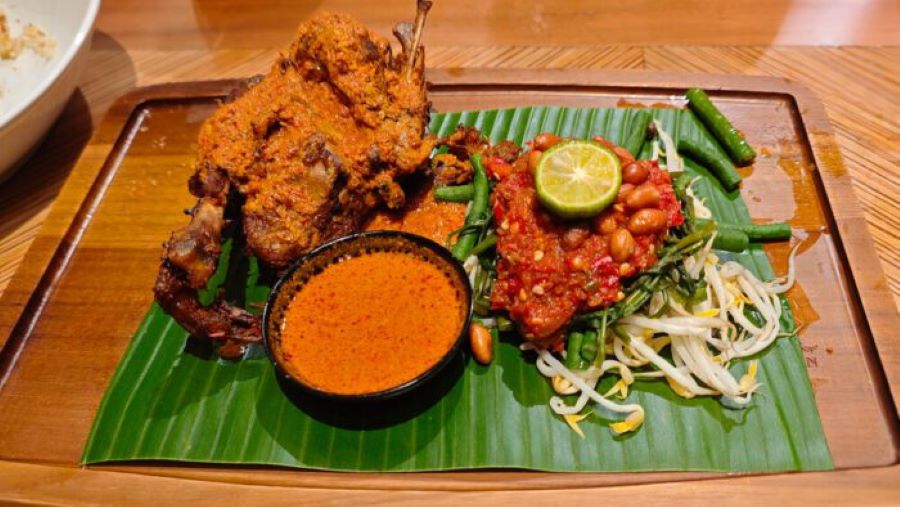
I didn’t expect my strongest memory of Sumbawa to start with a spoon.
Not the kind of dramatic spoon you see in travel shows, polished and posed beside a fancy plate. This one was simple, slightly scratched, and still warm from being rinsed in a plastic bowl near the kitchen. I was sitting on a woven mat with a small group of people—some locals, some visitors like me—when a woman I’d met only an hour earlier placed a plate in front of me and said something that needed no translation: eat, you’re home now.
Earlier that morning, I had been in the water, watching a huge shadow glide below me with an almost lazy grace. Everyone was whispering like we were inside a temple. Later, we would call it what it was: seeing a whale shark in Sumbawa. But right then, it felt like the ocean had quietly shifted something in me, and the food that came after helped it settle into a story I could carry.
In Sumbawa, the sea is the headline. But food is the bridge.
The Quiet Magic of a Shared Table
Tourists arrive with plans. Locals live with rhythms. And somehow, the easiest way those two worlds meet is over a meal.
Food has a way of leveling the room. You don’t need the same language to understand warm rice, grilled fish, or sweet tea poured into small glasses. You don’t need to know the perfect words when someone offers you a second helping and you laugh, because you’re already full but you also don’t want to refuse kindness.
That’s what I noticed quickly: meals aren’t just fuel here. They’re a form of connection.
In many places, tourists float through a destination like a bubble—observing, taking photos, leaving. In Sumbawa, a shared meal pops that bubble gently. Not with force, not with lectures, just with hospitality that feels natural. One plate becomes two, someone makes space, and suddenly you’re no longer “the visitor.” You’re part of a small moment that matters.
From Ocean Mornings to Kitchen Afternoons
If your day includes marine adventures around Saleh Bay, you’ll recognize the pattern: early start, salty air, the hum of a boat engine, and everyone scanning the water with hopeful eyes.
Then, after the ocean gives you its gift—whether it’s a calm swim, a perfect sunrise, or that unforgettable glide of a whale shark—you return to land with a different kind of hunger. Not just for food, but for grounding.
This is when the best conversations happen. People are relaxed. Sun-tired. Happy in that quiet way. And food becomes the natural next step, like the day is completing itself.
A local host might say, “Let’s eat first,” as if it’s obvious. And in a way, it is. Because once you’ve experienced something as big as a whale shark encounter, you need something human-sized to hold onto. Rice. Soup. A shared plate of fried snacks. Laughter that sounds like it’s always been there.
What Food Says Without Saying It
Some places teach you through museums. Sumbawa teaches you through meals.
A simple dish can tell you about geography (what grows here), history (what flavors arrived through trade), and family structure (who serves first, who eats last, who makes sure guests are full). And the best part is, nobody is trying to “teach” you. You just learn, naturally, as you eat.
I remember tasting a sambal that was bright and sharp—fresh chili, a little citrus, maybe a hint of something smoky. I reached for more because it was delicious, and a local man chuckled softly, sliding a cucumber slice toward me like a friendly warning. We laughed. He didn’t speak much English, I didn’t speak enough Bahasa for clever jokes, but we didn’t need it. The cucumber was the joke. The laughter was the translation.
This is how food connects locals and tourists: through shared understanding that doesn’t require perfect sentences.
The Familiar Comfort of Rice and the Adventure of Everything Else
There’s something comforting about the way rice anchors a meal. Even if you’re far from home, rice makes the plate feel familiar.
But then Sumbawa adds its own character: coconut fragrance, grilled seafood, herb-heavy vegetables, soups that feel light but deeply satisfying. Sometimes you’ll find a dish that tastes like it belongs to a celebration, and sometimes you’ll find the kind of food that locals probably eat on an ordinary day.
Both are important. Celebration dishes show pride. Daily dishes show truth.
And tourists love truth, even when they don’t say it out loud. We all want the real version of a place, not the version designed only for our cameras.
Coffee as a Conversation Starter
If you want to see connection happen in real time, watch what happens when coffee appears.
Someone pours it, someone offers it, and people lean in. Not literally every time, but emotionally. Coffee is an invitation to slow down. It says: stay a little longer. Tell me what you saw today. Tell me what surprised you.
I’ve had coffees in many places—some fancy, some forgettable. But coffee in Sumbawa, especially after a morning on the water, feels like part of the experience. It’s not only about taste. It’s about timing.
When visitors talk about the whale sharks, locals often listen with a kind of calm pride. Not boastful, not performative. More like: yes, the sea is beautiful, we’ve known it all our lives. And then they ask practical questions too—how was the water, was it calm, did you feel safe, did you enjoy it?
That mix of wonder and practicality is very Sumbawa. And coffee is often the space where it happens.
Food as a Form of Respect
One of the most striking cultural details I noticed is how seriously hosts take feeding guests.
There’s no casual “help yourself if you want.” Instead, you might hear: “Eat more.” “Try this.” “You haven’t had this yet.” And if you’re shy, you’ll still end up with a full plate because someone is quietly making sure you’re cared for.
This isn’t about showing off. It’s about respect.
In Sumbawa, sharing food is a way of saying: you matter here. Even if you arrived today and leave tomorrow, for this moment, you’re included.
That feeling builds trust quickly, which is exactly why food plays such a strong role in travel experiences around Saleh Bay. People come for the ocean, but they remember the people.
The Ocean Brings Visitors, Food Keeps Them Close
Let’s be honest: many travelers first hear about Sumbawa because of the sea. And more specifically, because of the chance to experience a whale shark in Sumbawa.
But a destination becomes a destination—not just a pin on a map—when there’s a deeper relationship between visitors and locals. Food creates that relationship because it’s shared, personal, and immediate. You can’t “scroll past” a meal. You sit with it. You taste it. You react to it. And the people around you react to your reaction.
That’s connection in its simplest form.
If you’re looking for a place to start exploring the broader story behind the bay—its people, its travel style, its ocean culture—this is the gateway I often point friends to when they ask where to begin:
Not because a website replaces real experience, but because it helps you frame the trip as something more than a checklist. The goal isn’t only to “see” something. It’s to understand the place that holds it.
A Few Dishes That Feel Like a Handshake
I won’t pretend every meal is the same, but there are flavors that feel like a recurring handshake—familiar each time you meet them.
- Grilled fish: smoky, simple, often served with sambal and lime.
- Coconut rice: fragrant and comforting, a soft landing after the sea.
- Vegetable side dishes: sometimes boiled greens, sometimes coconut-based mixes, always balancing the plate.
- Snacks: fried bananas, cassava, peanuts—small bites that turn waiting into sharing.
- Sweet tea: the unofficial glue of conversation.
These foods don’t just fill you up. They slow you down, and slowing down is when real travel begins.
Why Tourists Open Up Faster Over Food
Here’s something I noticed about myself: I asked better questions after I ate.
Before meals, tourists often stick to surface-level curiosity—where to go, what time, how long. After meals, the questions soften into something more human: What do you cook on special days? What’s your favorite dish? Did you grow up here? What’s the sea like in different seasons?
Food makes people comfortable enough to move beyond logistics. It gives you a shared experience to reference. You can say, “That soup was amazing,” and suddenly you’re in a conversation that isn’t about tourism anymore. It’s about life.
Locals respond to that. They can feel the difference between someone consuming a place and someone trying to connect with it.
Food, Community, and Ethical Travel
People often talk about ethical travel as a set of rules. Don’t do this. Respect that. Follow guidelines. All of that matters.
But there’s another side: ethical travel as relationship.
When tourists eat with locals, buy local snacks, drink local coffee, and listen to stories from people who live by the bay, the trip becomes less extractive and more shared. You’re not only taking photos and leaving. You’re participating in a community moment, even briefly.
That’s why I think the most memorable Saleh Bay whale shark tour stories often include food, even when travelers don’t plan it that way. The sea may be the main attraction, but the warmth of local hospitality is what makes the experience feel complete.
The Little Etiquette That Makes a Big Difference
You don’t need to be perfect, but a few small habits make home dining smoother and more respectful:
- Accept at least a little when someone offers food or tea. It’s often a gesture of welcome.
- Compliment sincerely—not dramatic, just honest. “This is delicious” goes a long way.
- Take your time. Meals here aren’t meant to be rushed.
- Be curious without interrogating. Ask about ingredients, family recipes, daily life.
- Smile often. It sounds simple, but it’s the universal language in a room.
These things create ease, and ease is where real connection grows.
Leaving the Table, Carrying the Place
Sometimes, the last thing you taste stays with you longer than the last thing you saw.
I still remember walking away from a home meal near the bay with that full, happy feeling—not only in my stomach, but in my chest. The kind of fullness that comes from being welcomed, from laughing with people you just met, from sharing a moment that wasn’t staged or rushed.
That’s what food does in Sumbawa. It connects.
It connects locals to tourists, tourists to each other, and all of us back to the place itself. Because when you share a meal after a day near the sea—after you’ve felt the awe of nature, after you’ve seen how gentle something massive can be—you start to understand Sumbawa not as an attraction, but as a living home.
And once you’ve felt that, the story of a whale shark in Sumbawa becomes more than a story you tell. It becomes a memory you can almost taste.